

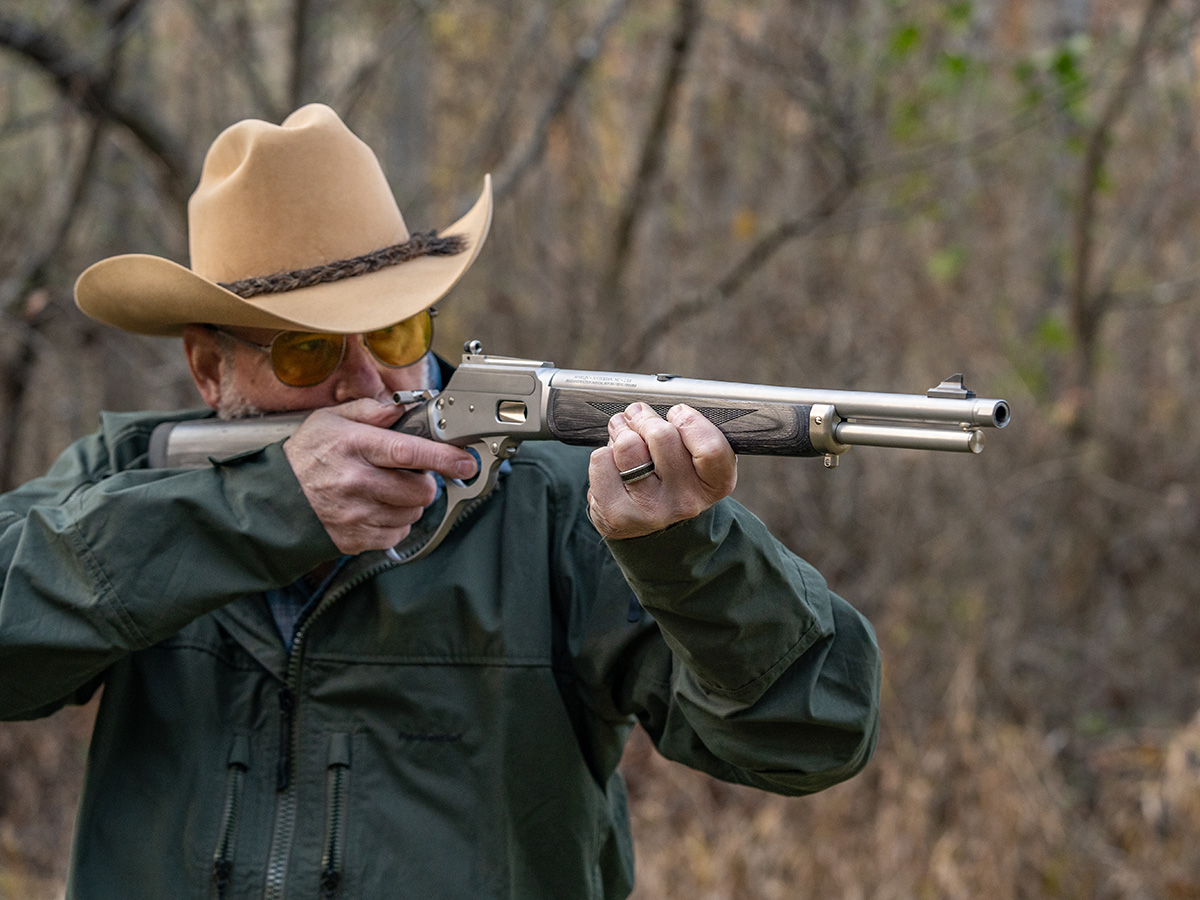
I hit the range to test out the Marlin 1894 Trapper along with a dozen loads of 10mm Auto.
The 10mm Automatic cartridge has had an up-and-down history. With support from former Marine, gun writer and Gunsite Academy founder Jeff Cooper, Norma introduced the 10mm Automatic cartridge in 1983. Designed for a pistol and loaded to 37,500 psi, it can push a 200-grain bullet to 1,200 fps out of a 5-inch barrel. With adoption by the FBI near the end of the 1980s, it quickly established a good following, especially in Colt’s 1911 Delta Elite pistol.
However, with the almost wholesale transition to the .40 S&W cartridge—the “40 Short and Weak”—shortly thereafter, interest in the 10mm began to wane, and I seriously doubt anyone back in the 1990s thought we would ever see a lever gun chambered in 10mm.
But then something else happened. In 2015, the FBI went back to the 9mm Luger cartridge for service pistols; law enforcement across the country followed suit, and the .40 S&W began to fade into oblivion. For some reason, the decline in popularity of the .40 S&W reignited interest in the more powerful 10mm Auto cartridge. Today, it’s even more popular than it was back in the early ’90s, and Marlin decided to take it somewhere it has never been—they chambered it in their 1894 lever gun.
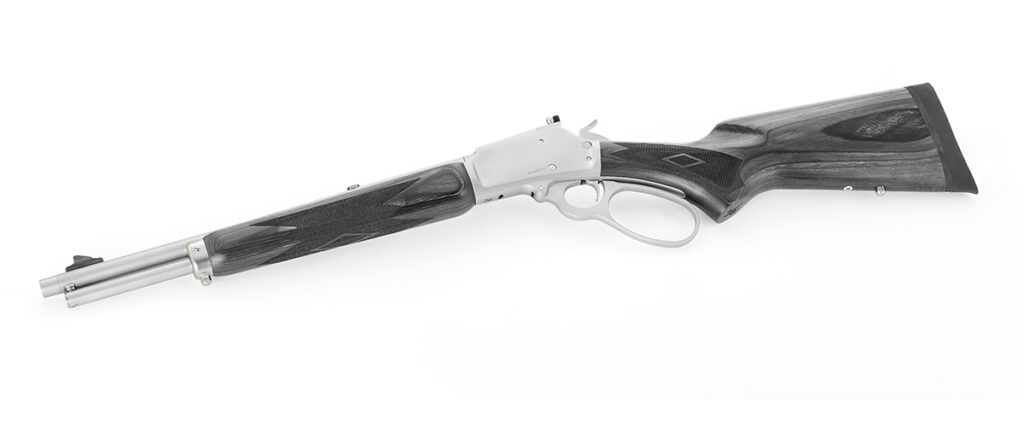
You might be wondering what if any appeal there is to a lever gun chambered for the 10mm Auto, because ballistically it really offers no advantage over a lever gun in .357 or .44 Magnum. However, there are two very good reasons for a lever gun in 10mm Auto. The first is that while it might not be ballistically better than the .357 or .44 Magnum, it does allow for a higher capacity. A 16-inch tubular magazine will hold 20 percent more 10mm ammo than it will .357 or .44 ammo. And, for those who have a 10mm pistol or revolver, they now can have a fast-handling and compact lever gun that shares the same ammo.
In the Old West, cowboys, outlaws and lawmen appreciated ammo compatibility between a carbine and a revolver, because they only had to carry one type. Also, with the longer barrel of the lever gun, they could shoot more accurately and with a little more ballistic umph the longer barrel provided. This concept still has practical application today, whether you are an outdoorsman or are looking for a handgun and rifle for self-defense application.
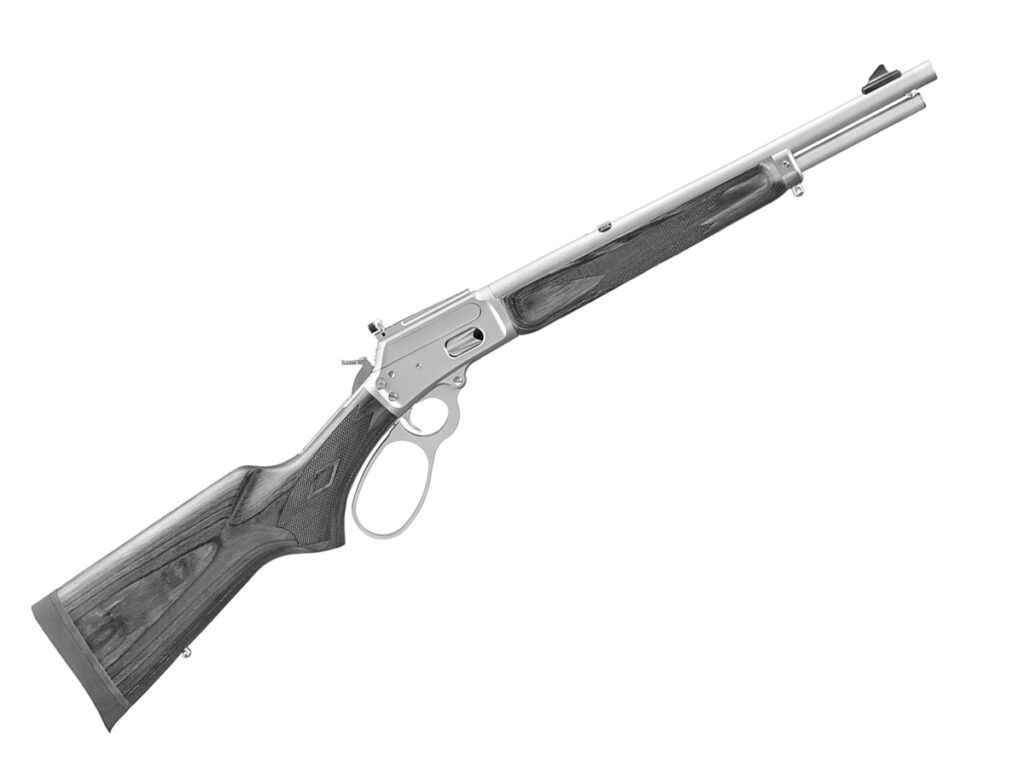
Marlin Trapper Series Model 1894 Specs
Stock #: 70453
Chambering: 10mm Automatic
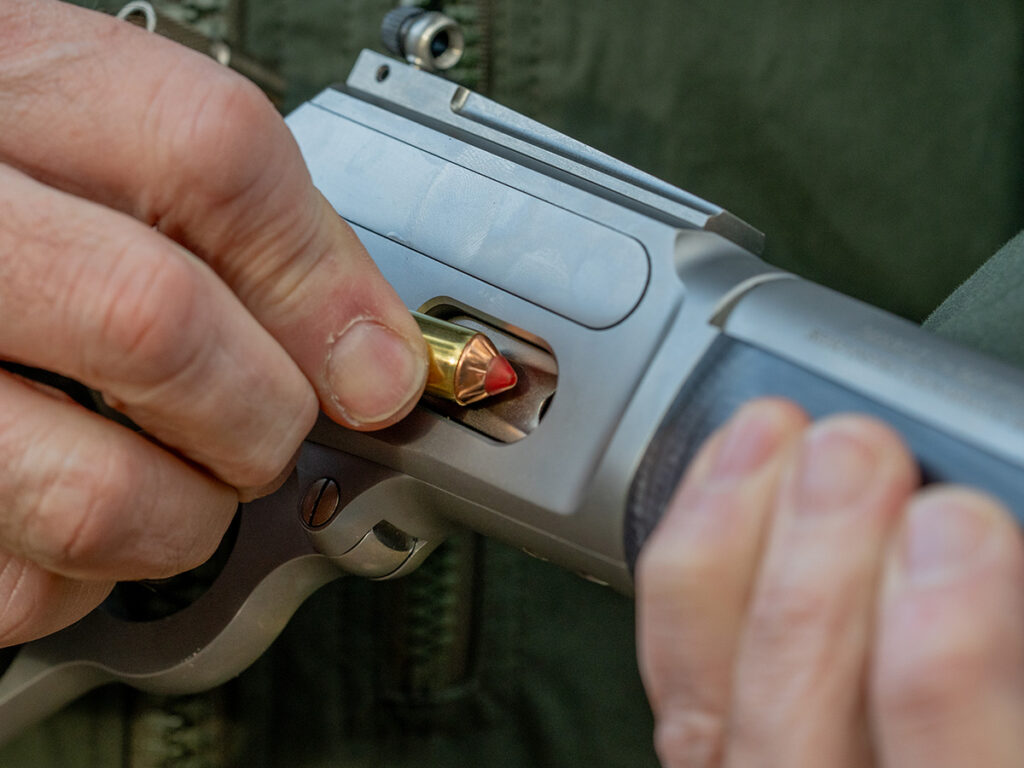
Capacity: 10
Stock: Black and gray laminate
Action: Lever action, stainless steel
Finish: Matte stainless
Sights: Skinner, adjustable aperture rear and white striped
Weight: 6.3 pounds
Length: 33.25 inches
Length of Pull: 13.38 inches
Barrel: 16.1-inch, stainless steel, 1:16 twist and threaded at 5/8×24 with a protector
MSRP: $1,600
Pros
- Excellent fit and finish
- Great precision with Hornady LeverEvolution 150-grain FTX
- Almost no recoil
Cons
- Poor precision with a Silencer Central Banish 46 V2 installed
- Some loads tested fed a little rough
- Must run the lever aggressively to eject the last fired case
The Trapper Lineup and Details
Currently, Marlin is offering six rifles in their Trapper configuration. They have two Model 1895 versions: one with a Magpul stock and one with a laminated black and gray hardwood stock. They also offer a Model 336 version of the Trapper in .30-30 Winchester with the laminated stock. And now they have three Model 1894 Trappers that includes one each in .357 and .44 Magnum, and the latest that is chambered for the 10mm Automatic pistol cartridge.
All of these Trapper rifles have a stainless-steel receiver and barrel, and they all have a matte stainless finish. Finish-wise, the only Trapper that’s different is the one in .45-70 with the Magpul stock. The hammer, screws and safety on this rifle have a black finish. Also, unlike all the other Trappers—including the newest in 10mm—the Magpul Trapper has a Picatinny-style scope base with an integral aperture sight. All the other Trappers have the Skinner adjustable aperture sight with a white-striped front sight.
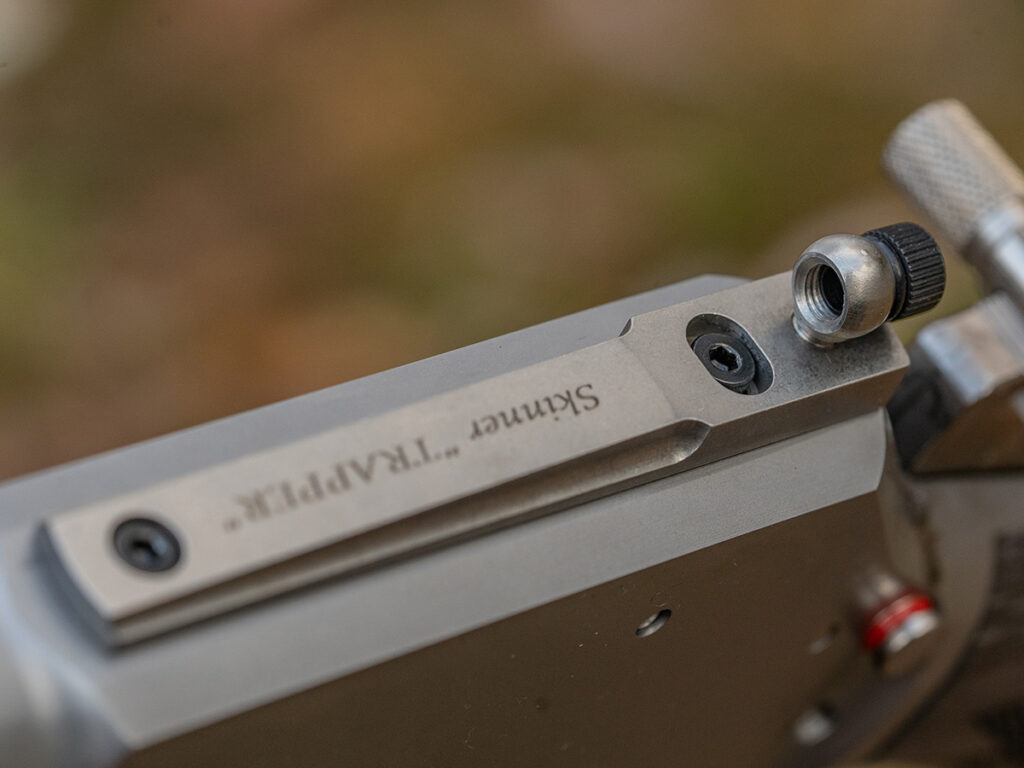
There are two things that set the new Trapper in 10mm Auto apart from the other Trapper models, and these are things you cannot see just by looking at the rifle. They are capacity and price. Trappers in .45-70 and .30-30 Winchester hold five rounds, the Trappers in .357 and .44 Magnum hold eight rounds, and the 10mm Trapper holds 10. As for price, the suggested retail for a Trapper is $1,499, but the 10mm Trapper retails for $1,599.
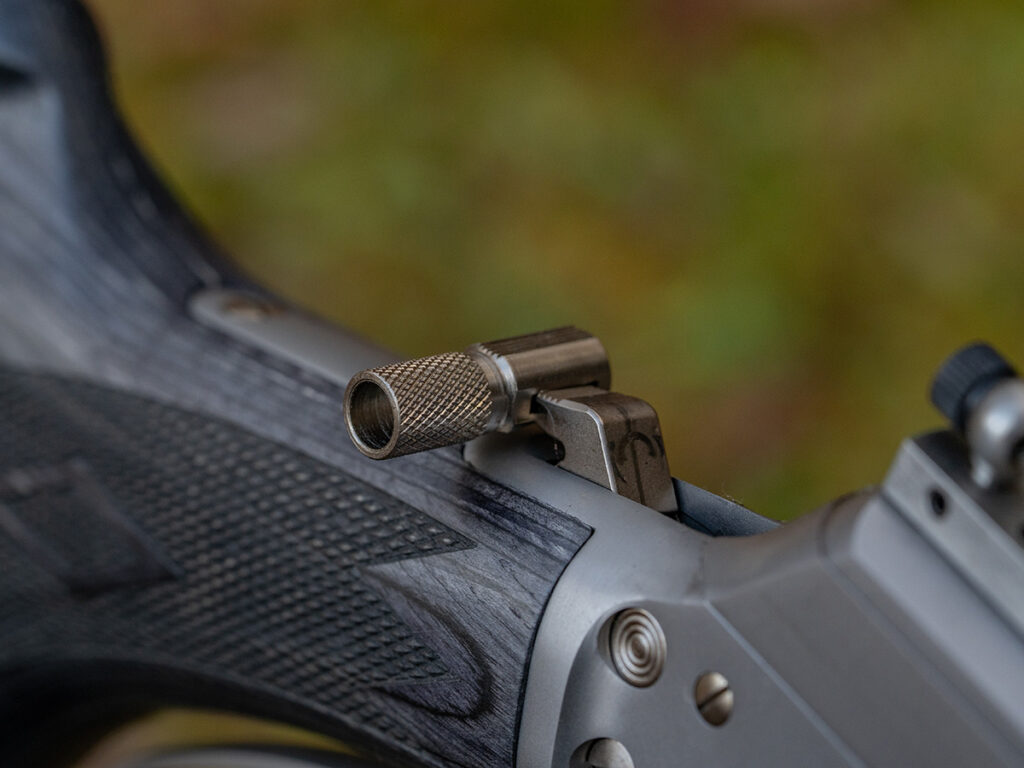
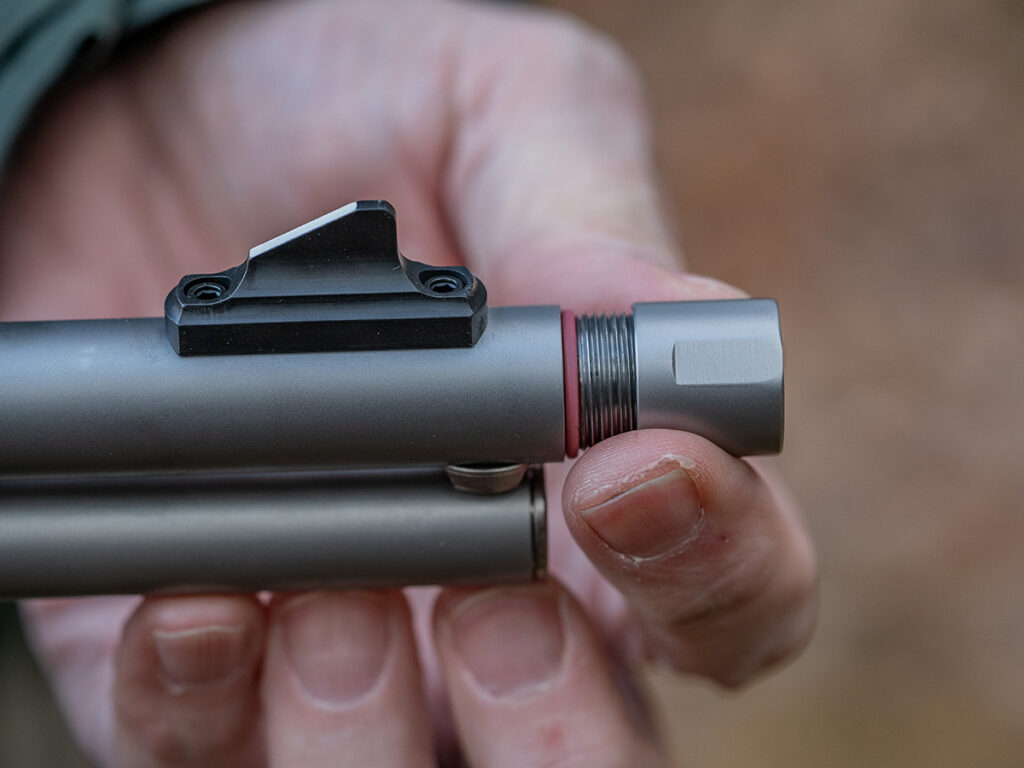
Like all the Trapper rifles I’ve handled and tested, fit and finish on the new 10mm Trapper were excellent. All new Marlin Trappers also have a threaded muzzle and come with a protective cap. The muzzle on the 10mm Trapper was threaded at 5/8×24, and a nice feature about the cap is that it has two flats to help you remove it with a wrench if necessary. You will also find a sling swivel stud located on the belly of the butt stock and extending from the nose cap on the forend.
Shots Fired
I mounted an old compact 6X riflescope to the 10mm Trapper so I could see what type of precision the rifle was capable of. Since the muzzle was threaded, I also installed a Silencer Central Banish 46 V2 suppressor. However, precision at 100 yards was poor with the suppressor—a few groups exceeded 6 inches. Some rifles just do not like some suppressors so all the shooting for record with the 10mm Trapper was conducted without a can.
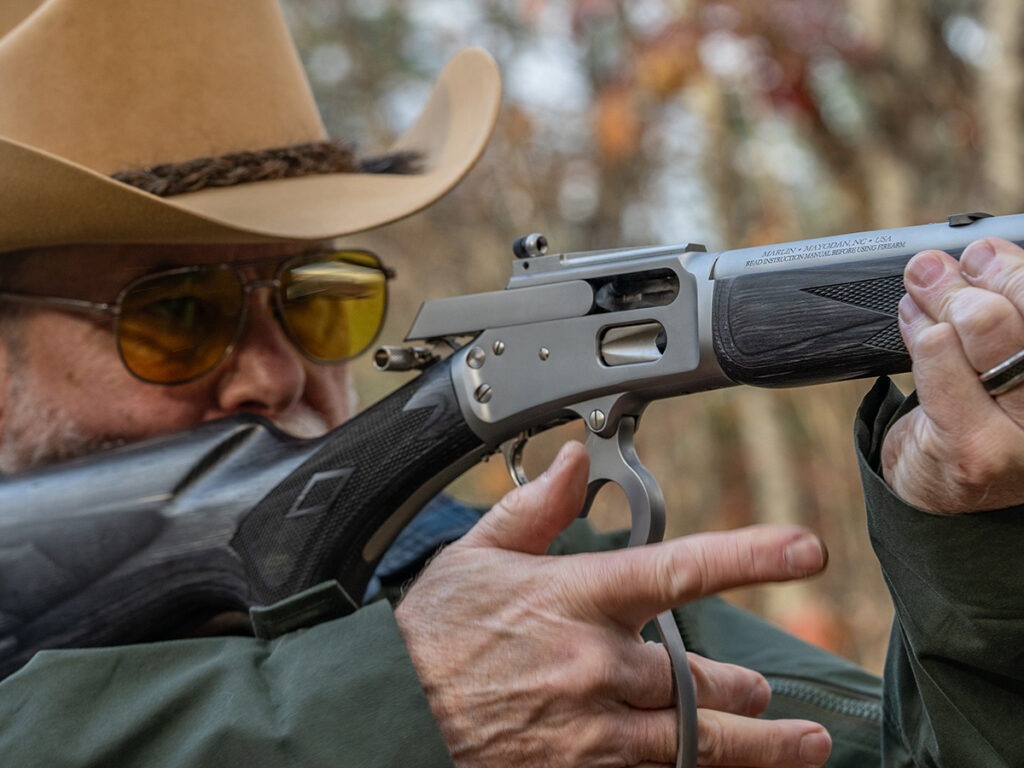
From the bench at 100 yards, the little carbine averaged 3.06 inches with multiple five-shot groups fired with a bunch of different loads. Based on my testing over the years, this is about par for the course when it comes to the precision you can expect from a lever gun shooting pistol or revolver ammo. Make no mistake, this 10mm Trapper is not a long-range gun, and you could say the same about any lever gun chambered for a handgun cartridge. However, the new LEVERevolution load from Hornady developed for this rifle shot very well, averaging just a shade more than an inch.
Shooting Results
| LOAD | MV | SD | ME | PRECISION |
| Doubletap Lead-Free 125-grain HP | 1,868 | 14.2 | 969 | 4.60 |
| Hornady Handgun Hunter 135-grain | 1,439 | 19.2 | 621 | 1.99 |
| Hornady LeverEvolution 150-grain FTX | 1,315 | 13.6 | 576 | 1.17 |
| CCI Blazer 180-grain FMJ FN | 1,364 | 9.2 | 744 | 2.94 |
| Buffalo Bore Heavy 180-grain JHP | 1,594 | 13.9 | 1,016 | 3.91 |
| Doubletap Match 180-grain FMJ FP | 1,323 | 15.4 | 700 | 2.21 |
| Buffalo Bore Dangerous Game 190-grain | 1,173 | 20.2 | 581 | 3.02 |
| Doubletap 200-grain JHP | 1,292 | 11.5 | 741 | 5.10 |
| Federal Solid Core 200-grain | 1,318 | 8.8 | 771 | 2.50 |
| Buffalo Bore Heavy 200-grain FMJ FN | 1,402 | 29.8 | 873 | 2.75 |
| Buffalo Bore Outdoorsman 220-grain HC | 1,335 | 15.4 | 870 | 4.01* |
| Doubletap Hard Cast 230-grain | 1,255 | 7.1 | 804 | 3.55 |
There were no extraction issues with fired cases, but there were some hitches with feeding and ejection. Some loads were sometimes a bit finicky during feeding. They always fed, but often you would feel a little glitch or hang up when working the lever.
However, this is not surprising. You must understand that all current factory 10mm ammunition is created to feed and function reliably in a 10mm pistol. After all, that’s what the cartridge was designed for. Because of this—the overall dimensions of the cartridge, particularly in relation to the bullet shape and style—issues like this can be expected. It’s no different with lever guns chambered for revolver cartridges. Some loads that will work in a revolver where overall length is not as critical may not work in a lever gun.
The only other issue associated with functioning concerned ejection. If you cycled the lever gingerly like a child pulls a Band-Aid off, and if it was the last round in the gun, sometimes the empty case would drop down inside the action. The cure for this was to run the gun like you were serious—like you were mad at it—and it would feed, extract and eject every time.
Overall Assessment
I really like this rifle, and it makes me want a 10mm pistol or revolver to go with it. It represents a first for the new Ruger owned Marlin and for the gun industry as well. It makes you wonder if a lever gun in 9mm or even .45 Auto might be on some engineer’s drawing board at Marlin.

The sticky feeding with some loads does not bother me for two reasons. First, I noticed the more I shot the rifle the smoother it got, and second, there are a boat load of good 10mm Auto loads to choose from. Aside from what you might find from Federal, Remington, Winchester and Hornady, between Buffalo Bore and Doubletap alone—the two best sources for 10mm ammo—there are nearly 30 loads to choose from, many of which should function perfectly.
A 10mm lever gun is a bold step for Marlin to take but I’m betting with the current resurgence of interest in the 10mm Automatic cartridge, along with all the new pistols and revolvers chambered for it, this rifle will do well. Aside form being fun to shoot with almost no recoil, it would be a great short range hunting rifle and—if you carry a 10mm—an even better truck gun.
Gear Notes: Timney’s Marlin Trigger
Since Ruger acquired Marlin after the Remington bankruptcy, the triggers on the new lever guns have been markedly better. Over the last several years, I’ve tested a half-dozen new Marlin lever guns and except for one, they all had triggers I could live with. The Trigger on the new 1894 Trapper in 10mm was reasonably good too. It broke at only 3.5 pounds with a slight amount of creep. The good news is that if you buy one of the new Marlin 1894 Trappers in 10mm and you’re not happy with the trigger, or if you already own another Marlin lever gun that does not have a great trigger, Timney has a solution.
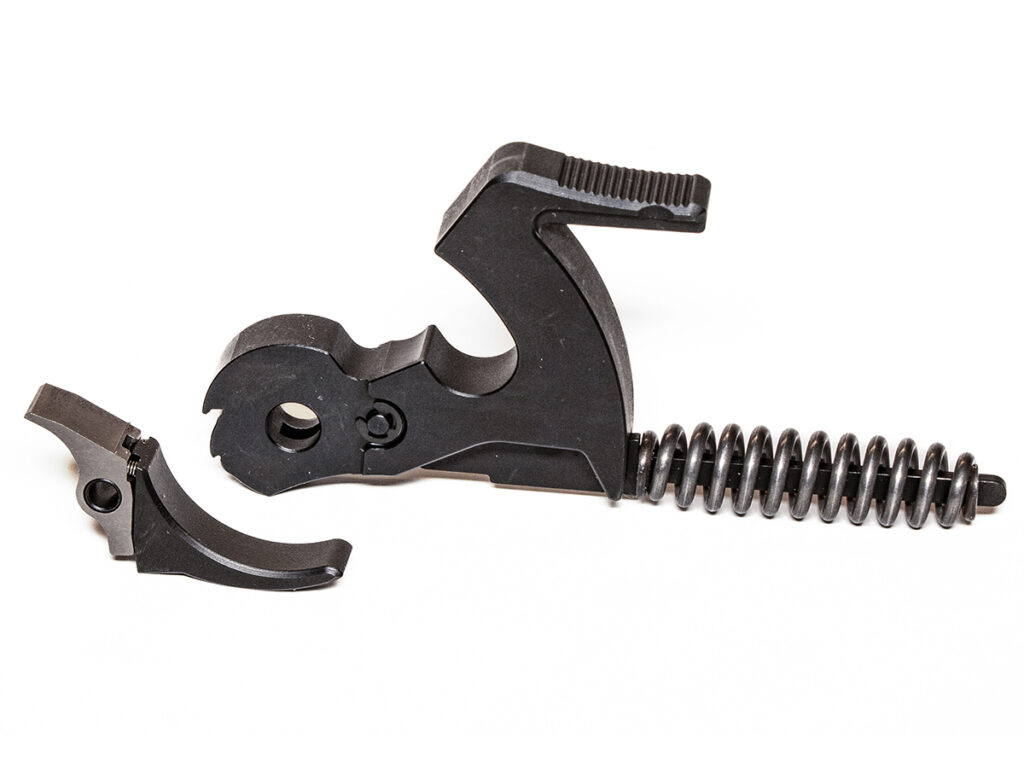
Timney Triggers now offers a drop-in trigger for Marlin lever action rifles. It retails for $199.95, and you can install it with some tools you probably have in that junk drawer in your kitchen. This trigger from Timney will work in any modern Marlin model 1894, 336 or 1895 that has the crossbolt/hammer blocking safety. Of course, you could opt to have a custom gunsmith tune your factory Marlin trigger, but it will cost you about as much as the Timney. However, beware, your run-of-the-mill gunsmith is generally not capable of tuning a lever gun trigger to be as safe and to work as well as the drop-in unit from Timney.
Editor’s Note: This article originally appeared in the January 2026 issue of Gun Digest the Magazine.
More On Lever-Action Rifles
Next Step: Get your FREE Printable Target Pack
Enhance your shooting precision with our 62 MOA Targets, perfect for rifles and handguns. Crafted in collaboration with Storm Tactical for accuracy and versatility.
Subscribe to the Gun Digest email newsletter and get your downloadable target pack sent straight to your inbox. Stay updated with the latest firearms info in the industry.
Read the full article here