

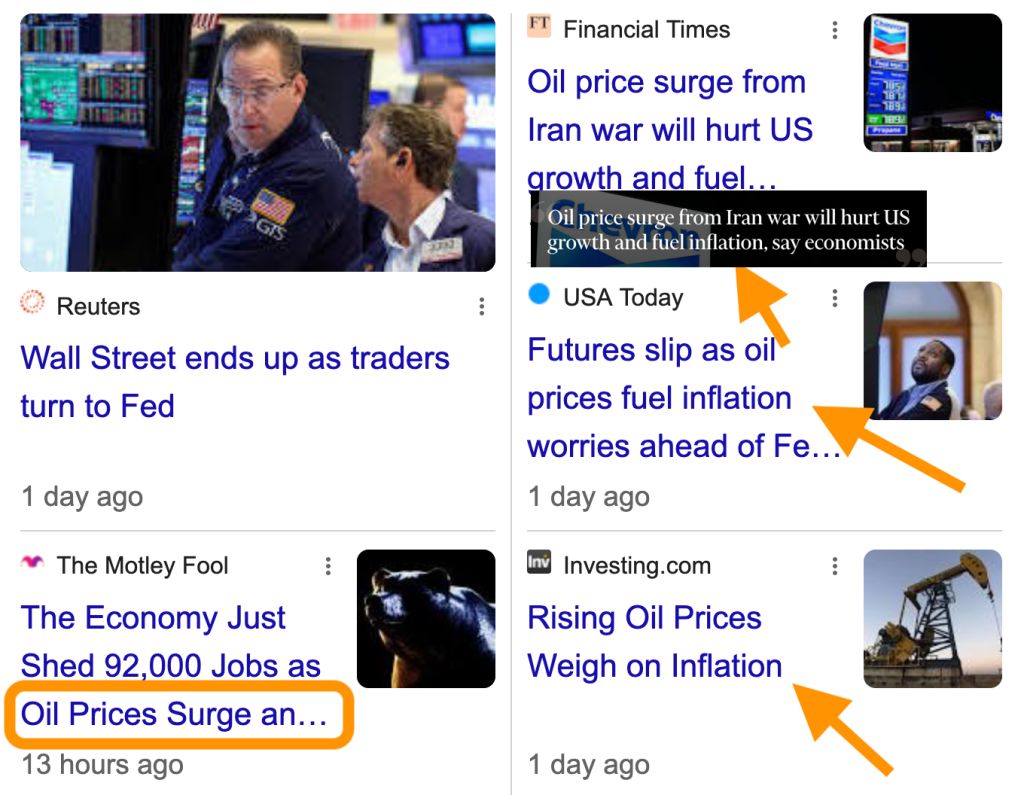
You just knew that it was going to happen; that the bombing of Iran and subsequent Iranian actions were going to drive up the oil price. That is rising prices in one commodity, and other affected commodities and materials like LNG and Fertilizer. It is not inflation.
The last “inflation” happened in Q1, 2020 when the Fed blew the final gasket of the old macro in a monetary extravaganza of new printed funny munny. This new money was then utilized fiscally by the administration then in power. That would be the Donald J. Trump administration, as the newly printed dough was catapulted out into the economy with great indiscretion because “OMG, Covid gonna kill us all!!!”


Trump has long since used his Biden card to any great effect. Yes, the Biden administration went balls out to maintain and intensify fiscal policy (i.e. they spew the inflation into the economy), but it was merely a continuation of Trump 1.0.
To repeat, the Fed created the inflation problem through monetary means in early 2020, and the administration and Congress provided the fiscal fire hoses to spray it all over this great land. So enough, Trump, about who’s fault the inflation problem is. It’s yours, it’s Biden’s, it’s Congress, and especially, it’s the Fed’s.
But I digressed. This post is written because the number of articles out there scaring the public about crude oil’s effects on inflation has become plentiful and vigorous. Media in full eyeball harvest mode.
Oil is being driven by geopolitics and war. That is not inflation. Inflation was cutting interest rates and manipulating bond markets in service to money printing and liquidity. It felt good in H2, 2020 – 2021, and ever since has been the source of much angst, as such inflationary operations always end up being.
The big picture macro is now an inflationary one, replacing the disinflationary macro that held sway until 2022, when the Continuum finally smashed the limiters (monthly EMA 100 & 12) to the upside and broke a decades-long trend.
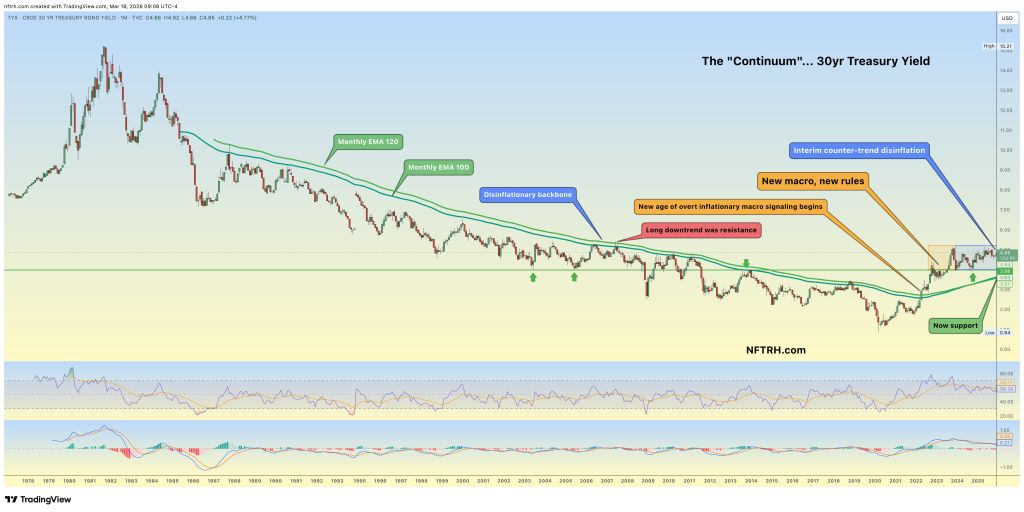
The macro is in a disinflationary situation that is interim to the bigger picture inflationary macro. Today, we have oil prices driving a gathering inflation hysteria. Oil prices and other knock-on prices rises caused by war will more likely serve to tamp down economies, possibly into recession in some cases. You just watch what prices do in that case.
The oil shock will eventually end, and decelerating economies may see prices (especially in non-critical assets) declining or at least moderating until…the next inflationary operation! Simple, eh?
The big problem now vs. the periodic inflationary mop-up jobs the Fed and government operated in the pre-2022 macro is that in changing long-term interest rate trends so clearly to the upside, any coming inflationary bailout is not likely to work anywhere near as swimmingly as those pre-2022 cases.
Two outcome options await; an intensifying and economically painful deflation or more likely, an economically corrosive stagflation. You know, that’s the inflation where economies are impaired, stock markets barely limp along and vital commodities and precious metals can rampage.
Interim to that outcome, the NFTRH view remains disinflation and I’m not getting knocked off that view because two countries are bombing another country, which in turn is bombing other countries and a key shipping lane is rendered temporarily non-functional. The view is maintained because war-induced oil prices spikes are not inflation. The view remains disinflation on the interim, mother of an inflation problem longer-term.
Read the full article here