

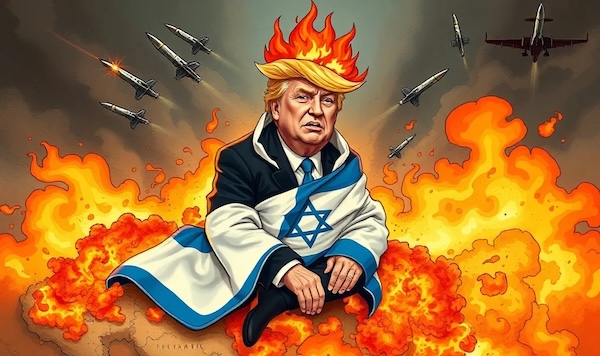
Clearly, the war in Iraq, while it is not ostensibly about oil, is all about oil. It’s all about oil in the sense that the oil market blew up recently. While the spike in oil prices reached an extreme 13% launch in the price of Brent crude in one day, settling back to about 10%, it was, according to one chart in the headlines below, only the 38th highest spike since 1990.
We saw worse prior to that from the OPEC oil embargo that gave the United States some of the worst inflation in its history. However, the first spikes back in 1990 and prior were smaller than the initial spike, and it only took a few days for them to go above the level. We are currently only at Day One of this crisis because this was the first day US markets were opened since the president and Israel started the war on Saturday. So, there may be larger spikes soon to come.
While the president has not said anything about this war being a grab for oil, as he did quite overtly with his brief war to topple the regime in Venezuela, the impact on oil was massive for a couple of reasons. 1) The president said that the war would last, at least, a month, while Venezuela was over as soon as it started.
2) The new Supreme Leader of Iran—a card-carrying, long-term member of the old Iranian regime—announced that Iran is closing the Persian Gulf completely. That means Iran has laid siege to all oil coming out of the Persian Gulf, as the new dictator-in-chief swore that not one drop of oil will pass through the Strait of Hormuz. He warned that any vessel that tries to pass through with oil will be immediately incinerated. The strait doesn’t have to be closed by a blockade in order to be fully closed. Terror will suffice.
Just as there is a major difference from Trump’s regime-change attack in his Venezuela oil grab, there is also a difference between this Iranian war and his and Netanyahu’s war with Iran last summer, when he attacked Fordow and other Iranian nuclear sites. The nuclear attack was scheduled to be a short-term, surgical strike and was also begun and completed in a day.
This is nothing like either of those earlier Trump-initiated wars. It is intended to reach broad and deep and to last a month at minimum in order to take out as much of Iran’s military power as possible and to leave the old guard in Iran with a mouthful of broken fangs. It is intended to keep damaging the regime until it topples forever. Whether Trump, Hegseth, and others running the US military now succeed is a different question, but their stated intention assures a long timeframe because the longstanding Shiite regime knows it either does all the damage now that it has ever promised to do to the West and to Israel or forever forfeits the opportunity.
The siege on oil became fully effective immediately, even though it is not clear Iran has the capacity to hit every ship that comes through because it doesn’t matter whether they can hit every one. That is a point some of the less astute writers are missing. The fact that Iran can certainly hit a good number of them was enough to stop all merchant-marine traffic through the strait because insurance prices shot up like an Iranian missile, and no one wants to get their ship and all of its oil incinerated. So, the threat, backed by action that has already put at least one tanker up in smoke, is enough to completely stop traffic, and Iran sounds like its siege will be effective for as long as this war goes on.
When mainstream financial media writes things like the following, they reveal how surprisingly thin their thinking capacity is:
Analysts have also noted the logistical difficulties Iran would face in ordering and maintaining a closure of the strait, including U.S. naval superiority in the region and the risks the regime would run of losing allies by cutting off energy supply. The threat of closure also isn’t new for the Islamic Republic, which has threatened to close the strait multiple times in the past, but never fully followed through.
First, it doesn’t take a blockade. All it takes is enough effectiveness in decimating ships trying to traverse the gulf to make all ships decide it is not worth the risk. Literal decimation (a loss of one in ten) is more than enough to make sure no one moves. What captain or company wants to bank an entire Supertanker and all the oil inside and the crew and the captain’s own life on those odds? Every bomb and missile doesn’t have to make it through. A few hits that light the cargo on fire will suffice.
Second, the concern of losing allies becomes meaningless as soon as you know the crisis is existential because your enemy has promised you will all be dead and gone before the war ends, and has the firepower to likely do that.
So, we have a classic case of analysts paid far more than I make who can’t even think in basic terms.
JP Morgan said that, if the war is sustained, the price of oil could reach $120/bbl. It is not just Iranian oil that is being cut out of production, but all oil that ships through Hormuz. Plus, while Iranian oil is under tight sanctions, it has still been selling a lot of crude at a discount to China. China will now have to look elsewhere, and that move of major demand will raise the price of oil elsewhere.
Approximately 20% of the world’s liquid petroleum, passes through the strait, which is less than 30 miles across at its narrowest point. In a moment of regional instability, the seafaring passageway can quickly turn into a strategic chokepoint, and its effects are already rippling out on a global scale.
Before assuming OPEC was worse than this could be, consider that something much bigger and long-term is at play that did not happen at all during the OPEC embargo: Oil refineries are being attacked and knocked out of production.
The largest oil refinery in Saudi Arabia has already been shut down as a precaution because of being hit by the flying debris of a knocked-down Iranian missile.
Qatar’s massive liquid natural gas production was also shut down for the same kind of precautionary reason, throwing the entire global LNG market into shock.
That’s just day one. Imagine how many more refineries in the region may get struck by Iran sufficiently to cause them to shut down for precautionary reasons or even be hit hard enough on purpose to knock them out of production for a few years.
From the refiner’s perspective, it is better to have everything stored in tanks than to have cracking towers full of petroleum that could be turned into giant bombs that can blow up the entire production facility, taking the refinery offline for a couple of years. Iran has long promised a scorched-earth policy, and this regime now knows it has nothing to lose by going there because its death has already been guaranteed by President Trump.
The OPEC-caused recession of the seventies and eighties was deep and multi-decadal. This one has the potential to be just as large as the war alone, and worse if refineries are taken out to cause long-term damage, but it will be happening on top of a global economy that was already sinking into collapse and built over the greatest caverns of debt ever known to mankind. As I pointed out a week ago, we are already sitting on top of a debt-to-GDP ratio not equalled since WWII, but that was at the end of WWII. That end point is our starting point, if we should go into WWIII.
Other market mayhem
It is reasonable to think that, before things get that bad, both sides will find or make up reasons to de-escalate, except that this is Israel’s one chance and the United States one chance to finally end the Iranian problem for good … in their minds. Even if they decide to find an offramp, they are operating on an already fragile economic foundation that may suffer damages they cannot even anticipate much sooner than they could ever expect.
The chaos is already multi-market: Oil, gold, and Treasury markets all exploded due to the war in Iraq. Stocks did not. Stocks took the war in stride, but I had noted over the weekend that the stock market had already somewhat priced the likelihood of this war in, which, I said, might somewhat mitigate the impact on stocks.
For gold, it turns out this war is almost as uplifting for prices as it is for oil prices. That’s because a large volume of gold is shipped by air over this region, particularly between India, parts of the Middle East, and Europe, and air traffic is shut down. So, that effective shutdown is creating a choke point for yellow gold, just as the war is doing for black gold.
For Treasuries, the war created a lot of volatility. First, Treasury yields were down (prices up) because the US economy was sinking in the most recent economic reports, such as GDP, which meant the Fed might be cutting rates. Then, Treasuries shot back up and took back the whole safe-haven drop in yields in one day as the latest producer price gauges showed that inflation at the producer level is surging, and bonds critically price in inflation. Then the new Iranian oil embargo hit, and yields soared again because the closure of the Persian Gulf means oil prices will rise a lot more, and that means all prices will rise a lot more DEPENDING on how long the war lasts, because oil is involved in everything.
So far, the war is only widening. Hezbollah leaped into the fray, but then the Lebanese government ordered them to stop, as the government does not want to be in the conflict. However, the Lebanese government has never been very effective at keeping Hezbollah from doing whatever it wants to do.
With the gulf grinding to a complete halt for shipping, and the war likely to continue for at least a month, according to the president of the United States, and with Iran’s leader saying he will not negotiate, we face a strong likelihood of a huge upsurge in inflation pressures on top of those that were already slowly rising. There is no slack in the system to absorb more costs without passing all of them along to consumers, and this kind of event gives businesses the excuse they have been looking for to pass along all the producer-side inflation they have already experienced. “We can’t help it; it’s the war.”
The “Peace President” strikes again
Smoke rises from Tehran
For the Peace President, his new war is already a unique achievement even before it is won. The president seems to have stopped talking about regime change as the primary objective because that was backfiring at home due to having promised during his campaign no more regime-change wars. He has also stopped talking, for the moment, about this war being about denuclearization because people kept reminding him that he already told all of us that Iran’s nuclear capabilities were completely “obliterated” by him last summer, so talk of doing that again was calling into question the success of his earlier war.
This war, however, gives Trump a record that may bring a different award than the Nobel Peace Prize he so desperately craved. He may be due for the No-bells, No-Peace Prize because President Trump has now gotten the United States into more wars in barely over a year than Biden got us involved in during four years. In fact …
Wannabe Nobel Laureate Donald Trump has now ordered more attacks against a greater number of countries than any other president in modern U.S. history.
That earth-scorching new record of getting the US involved in seven wars in barely over a year is not selling any better with the MAGA crowd than his great accomplishment in bringing about new experimental vaccines in record time with less testing than any vaccine prior, though they were tested on the entire world all at once. That was a record in testing. MAGA expressly elected him to do the exact opposite of starting seven wars, so stalwart sycophants like Tuckered Carlson are already berating Trump’s new war as “abhorrent” and “evil.”
Trump likes to brag that he has stopped eight wars already, though no one has figured out what wars those were, especially since the war in Gaza continues. The number of wars Trump claims he has stopped is now only one war more than the number Trump has started. However, this new war has just re-ignited last year’s war with Iran at a far bigger scale than the one he started and subsequently stopped with Iran last year. (It would seem, in fact, that many of the wars he stopped are wars he started.) Since this war is restarting the war he stopped, that should negate one war from the list of wars he stopped, given that the one he solved last year with Iran “for good” is now bigger and hotter than anything ever seen with Iran before. That would leave him equal for wars stopped and wars started.
President Trump has said “peace, peace,” more than any president I can recall, either in my lifetime or reading back in history; yet he has started more conflicts for the US than any president in modern history.
He has ordered strikes against targets across no less than seven nations—Iran, Nigeria, Venezuela, Iraq, Somalia, Syria and Yemen—at a rate that has already outstripped the total sanctioned by Joe Biden throughout the Democratic president’s four years at the White House….
The first three of the countries targeted by Trump have never before come under attack by the U.S. His assault on Iran, which has plunged the Middle East into chaos as shockwaves ripple across the global economy, has claimed at least four U.S. service members’ lives since it began on Saturday….
Trump’s latest assault flies directly in the face of his promises to voters on the campaign trail. “I’m not going to start a war. I’m going to stop wars,” he told the nation in his 2024 election night victory speech.
This is his biggest war to date, and it has all the possibilities of going a lot bigger still. It could even become the most embroiled war the US has been in since Vietnam, maybe even since WWII. I’m not saying it will be, but Trump is dropping bombs in the world’s hottest tinder box at the epicenter of religious wars and oil wars and millennia-old feuds. So, all the combustible ingredients are there.
In fact, President Trump told Jake Tapper that the “big one” is yet to come. The worst attack on Iran is yet to come. This is just the preliminary action, according to Trump:
Then the president said, it’s about to get even less safe. He said, quote, “We haven’t even started hitting them hard. The big wave hasn’t even happened. The big one is coming soon.”
So, look out! It’s about to get really exciting. Trump has had an easy time of selling the lie that he has stopped eight wars to his supporters, but I suspect the wars he has started are beginning to look to many of his supporters like they may outweigh the skirmishes he stopped, especially since he started some of the ones he stopped—or, at least, US involvement in them—before he stopped them.
(Following the headlines below, I will lay out some problematic cracks just being revealed in the economy that could easily break apart under the stresses of Donald Trump’s war to make America great again.)
Read the full article here